Moissanite is silicon carbide, and the moissanite used in jewellery is made in a laboratory. It is 9.25 on the Mohs hardness scale against diamond's 10, shows more than twice the fire of diamond, and has double refraction that can make its back facets look doubled. It costs much less than diamond, and it is a different material, not a type of diamond.
What moissanite is
Moissanite is silicon carbide. Natural moissanite is very rare, so the moissanite set in jewellery is created in a laboratory. It was introduced as a diamond alternative in the late 1990s.
Moissanite is a different material from diamond. A laboratory-grown diamond, by contrast, is a real diamond with the same make-up as a natural one. Chapel Street Pawnbrokers, which shares our shop, has a guide to lab-grown diamonds.
How they compare
| Moissanite | Diamond | |
|---|---|---|
| Material | Silicon carbide, laboratory made | Carbon, natural or laboratory grown |
| Hardness (Mohs) | 9.25 | 10, the hardest gem |
| Fire | More than twice that of diamond, with strong rainbow flashes | Balanced white sparkle and fire |
| Refraction | Doubly refractive, so back facets can look doubled | Singly refractive |
| Cost | Much lower | Higher, depending on the four Cs |
| Grading | Not graded on the GIA diamond scales | Graded for colour and clarity |
Sparkle and fire
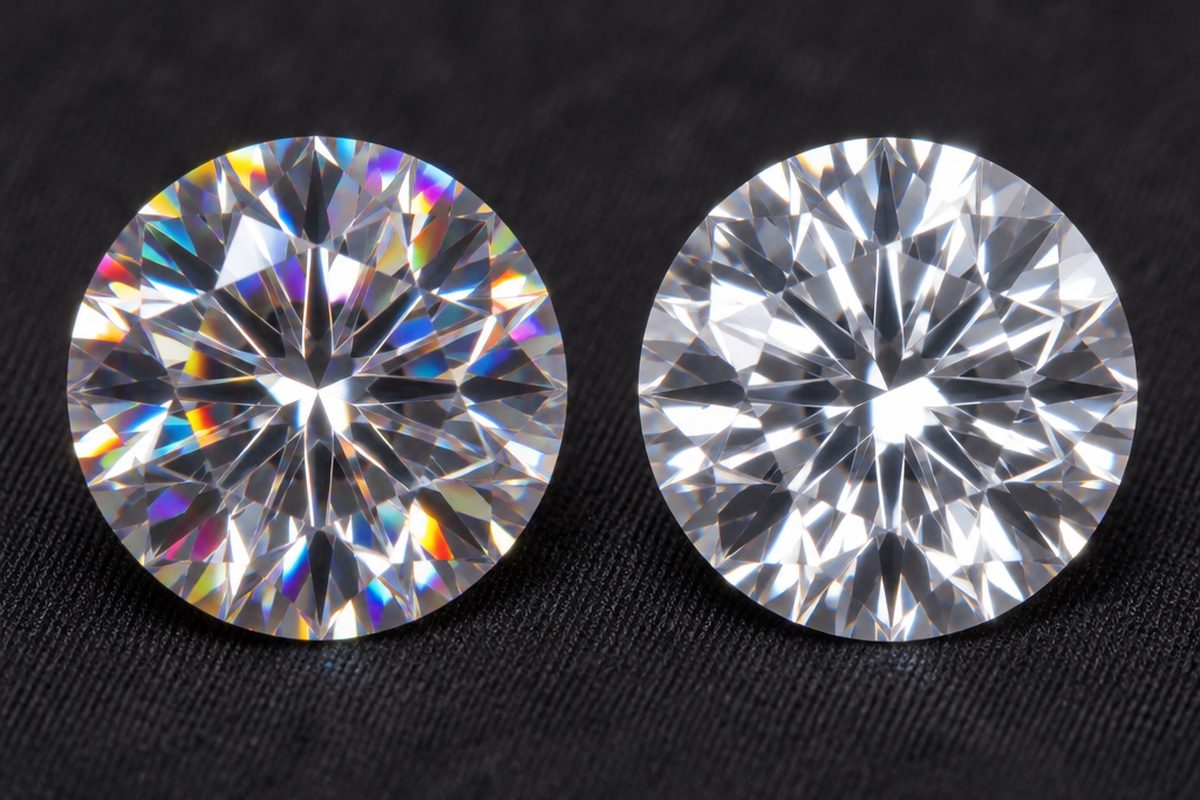
Fire is the rainbow colour you see as a stone moves. Moissanite has more than twice the fire of diamond, which gives it a lively, colourful sparkle. Some people love it, and others find that in larger sizes it looks less like a diamond because of it.
Moissanite is also doubly refractive. Light splits as it passes through, so when you look into the stone from some angles the edges of the back facets appear doubled and can look slightly fuzzy. Diamond doesn't do this.
Hardness and everyday wear
At 9.25 on the Mohs scale, moissanite is harder than every common gem apart from diamond, so it stands up well to everyday wear. Diamond is still harder and keeps its polish under the same conditions.
How jewellers tell them apart
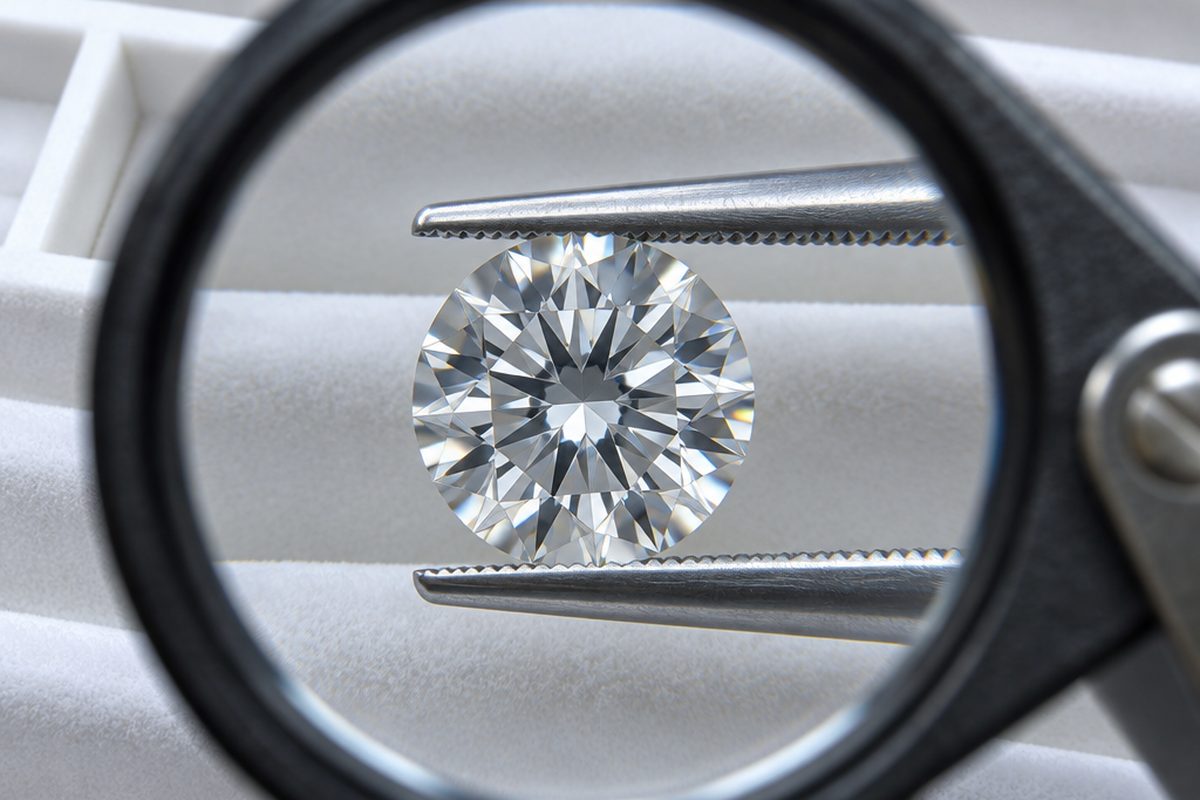
Moissanite conducts heat in a similar way to diamond, so the basic heat testers used on diamonds can be fooled by it. Jewellers and gem labs use other tests as well, and the doubled facets seen under magnification are one of the giveaways.
If you are buying a stone described as a diamond, ask for its grading report or a valuation.
Cost, value and resale
Moissanite costs far less than a diamond of a similar size. Diamonds have an established resale market, and moissanite has very little resale value. If future value matters to you, weigh that up, and if size and sparkle on a budget matter more, moissanite is a common choice.
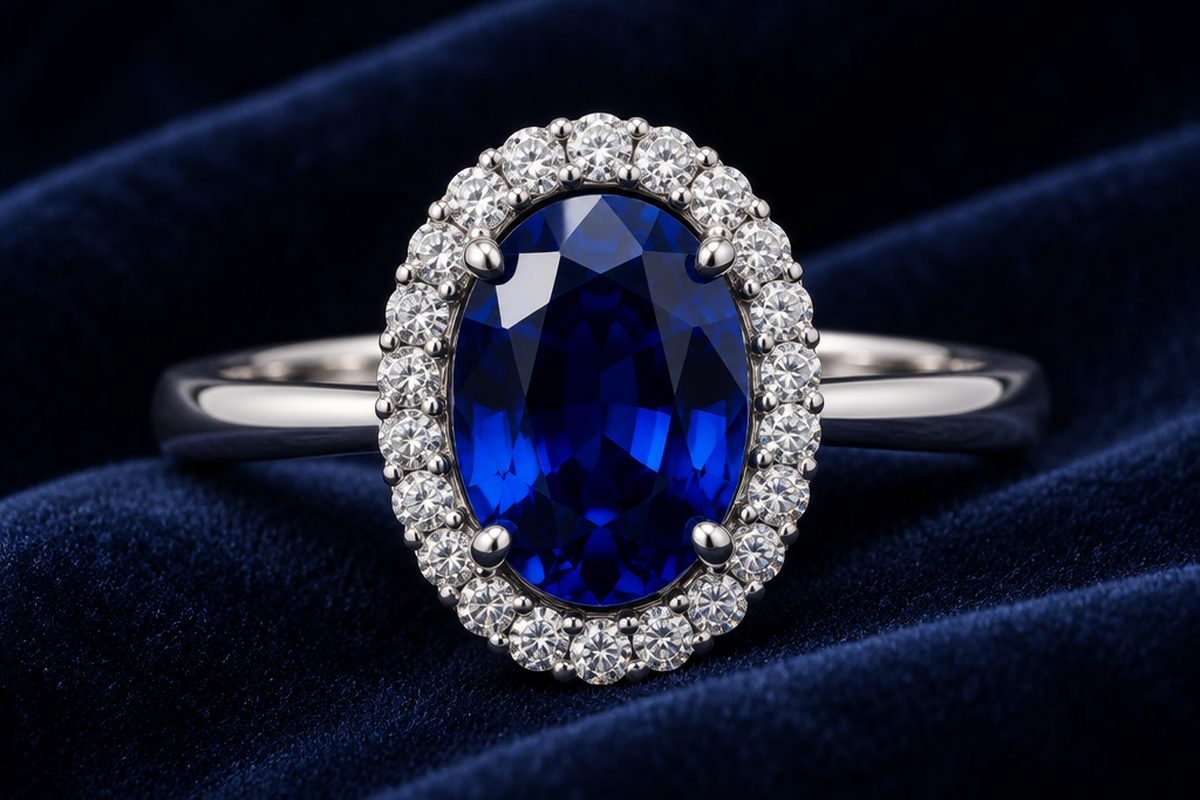
For other ways to stretch a budget, see how much to spend on an engagement ring, or consider a sapphire. Ask us about the stones we can set in a custom ring at 378 Chapel Street, South Yarra.
Questions
Is moissanite a fake diamond?
It is a different gem, not a diamond. Sold honestly as moissanite, it isn't fake. It only becomes a problem when it is passed off as diamond.
Does moissanite get cloudy?
Moissanite itself doesn't go cloudy, but like any stone it collects skin oil and dirt, which dulls the sparkle until it is cleaned.
Can a diamond tester tell moissanite from diamond?
A basic heat tester can be fooled, because moissanite conducts heat much like diamond. Other tests and magnification tell them apart.
Is moissanite as hard as diamond?
Close. Moissanite is 9.25 on the Mohs scale and diamond is 10.